


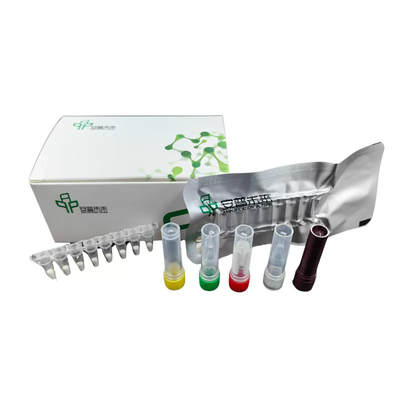
Respiratory Pathogen Detection Kit
Your Leading Respiratory Pathogen Detection Kit Supplier
Amp-Future Biotech specializes in the development, production, and sales of isothermal nucleic acid amplification reagents. Our proprietary MIRA technology (Multienzyme Isothermal Rapid Amplification) ensures fast, accurate, and portable molecular detection, suitable for on-site testing in diverse fields including clinical, agriculture, veterinary , food safety and genetic technologies.




Why choose us?
Our certifications
We has obtained certifications such as NMPA, CE, and the Veterinary Drug Registration License etc.
Our factory
The company is equipped with advanced facilities and operates a class 100,000 cleanroom environment. With an annual reagent production capacity exceeding 90 million tests.
Sales market
Our business footprint covers the entire domestic market and extends across Europe, North America, Middle East and Asia.
Custom service
We can undertake independent and joint development of projects, OEM/ODM. Primer probe design, guidance, synthesis and other services.
Types of Respiratory Pathogen Detection Kit




COVID-19 - An acute respiratory infectious disease. The main manifestations include fever, fatigue and dry cough. Other symptoms might be nasal congestion, runny nose, sore throat, myalgia and diarrhea. Currently, the patients infected by the novel coronavirus are the main source of infection. Asymptomatic infected people can also be an infectious source.
Influenza (flu) - Contagious respiratory illness caused by influenza viruses. Influenza viruses can cause mild to severe illness. Some people, such as older people, young children, and people with certain underlying health conditions, are at higher risk for serious flu complications. There are two main types of influenza viruses: types A B. Both type A and B influenza viruses regularly spread among people, and are responsible for seasonal flu each year.
Respiratory Syncytial Virus (RSV) - The most common virus that causes lower respiratory tract infection in infants and young children. It is mainly transmitted by droplet or direct contact, and the population is generally susceptible. The peak season is from November to April.
Human Adenoviruses - Comprise an important group of etiologic agents that are responsible for various diseases in adults and children, such as respiratory, ocular, gastroenteric, and urinary infections. In immunocompromised and organ-transplanted individuals, these agents can cause generalized infections.
Mycoplasma pneumoniae - Infection has a worldwide distribution. It occurs through - out the year, most frequently in the colder months. Clinical diagnosis of M.pneumoniae infection is frequently hindered by a lack of specific signs and symptoms, although in the majority of cases increasing cough, malaise, low-grade fever and headache are reported.
Chlamydia pneumoniae - Causes infections of the upper and lower respiratory tract and in most cases, infections occur with mild symptoms or asymptomatic. C. pneumoniae usually spreads by airborne droplets and in a nearby person-to-person contact. Primary infection occurs mainly in children in school or young people, and cases of reinfection occur mainly in elderly people.
Human parainfluenza viruses (PIV) are a type of virus that often causes lower respiratory tract infections in children, the human parainfluenza virus can cause recurrent upper respiratory tract infections (such as colds and sore throat). It can also cause severe recurrent lower respiratory tract diseases (such as pneumonia, bronchitis, and bronchiolitis), especially in the elderly and immunocompromised population.
Key Features
Broad-spectrum detection
Tests for critical respiratory viruses: COVID-19, Influenza A, Influenza B, and RSV, which are essential for appropriate response and treatment.
High precision and accuracy
Employs advanced molecular techniques to ensure reliable detection and quantification of viral load.
Non-invasive sampling
Utilizes a sponge saliva collection device, making the sample collection process easy, comfortable, and hygienic.
Rapid results
Delivers results within days, enabling fast decision-making and peace of mind during flu seasons and pandemics.
Benefits
Early detection
Identifies infections early to help manage symptoms more effectively and reduce the spread of illness.
All-in-one convenience
Tests multiple pathogens with a single sample, eliminating multiple tests and visits to healthcare facilities.
User-friendly experience
From sample collection to result interpretation, the entire process is designed with your convenience and safety in mind.
Technical Parameters
|
Parameter |
Value |
|
Product Name |
SARS-CoV-2 Detection NFO Kit |
|
Manufacturer |
Amp-future |
|
Target Gene |
N Gene |
|
Sample Type |
Nasopharyngeal Swab |
|
Detection Limit |
500-1000copies/µL |
|
Test Time |
5-20mins |
|
Storage Temperature |
-20°C |
|
Packaging |
48 Tests/kit |
|
Kit Components |
Primers, Probes, Enzymes, Buffers |
|
Shipping |
Ice |
Custom process

Collaborative Partners

FAQ
We're professional respiratory pathogen detection kit manufacturers and suppliers in China, specialized in providing high quality customized service. If you're going to buy respiratory pathogen detection kit at competitive price, welcome to get quotation and free sample from our factory.
marketing kits, international sale kits, Influenza A Virus Fluorescence Detection Kit