


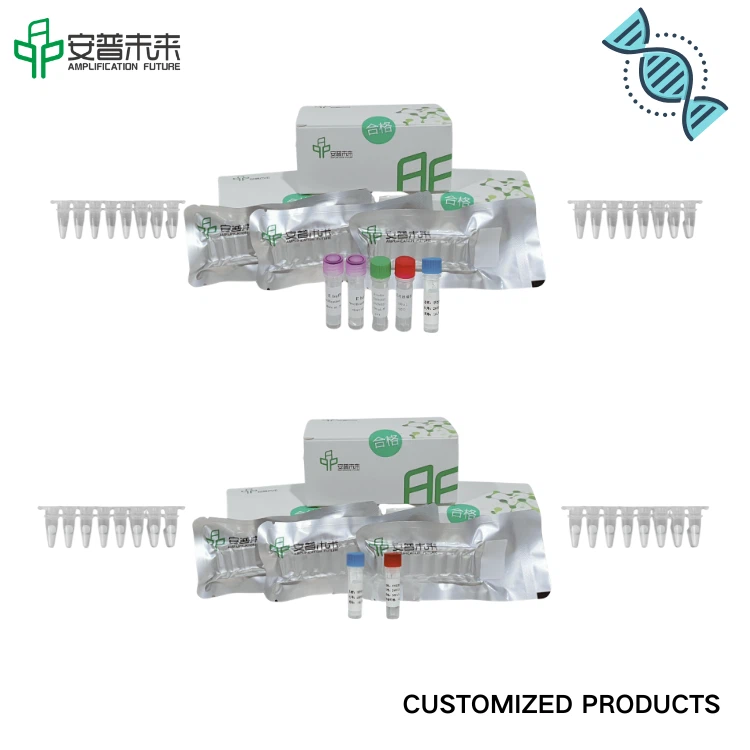

【Product Name】MIRA Group B Streptococcuse Fluorescence Detection Kit(Research Use Only)
【Packing Specifications】48 T/pack
【Intended usage】
This kit is suitable for general qualitative detection of Group B Streptococcuse without virus typing.
Group B Streptococcus (GBS), also known as Streptococcus agalactiae, is a common opportunistic pathogen in reproductive infections among pregnant women. It can intermittently, transiently, or persistently colonize the gastrointestinal and reproductive tracts. Under certain conditions, colonization can transition into pathogenicity, leading to invasive GBS disease in pregnant women or newborns.
GBS infections are widespread globally, with varying colonization rates among pregnant women across different countries and regions. A meta-analysis of 30 Chinese studies published between 2000 and 2018, encompassing a total of 44,716 pregnant women, reported a GBS colonization rate of 11.3% in China.
To regulate the prevention of maternal and neonatal health risks associated with GBS infections, the Chinese Journal of Perinatal Medicine published the Chinese Expert Consensus on the Prevention of Perinatal Group B Streptococcal Disease in 2021. This consensus recommends GBS screening for all pregnant women between 35 and 37 weeks of gestation.
【Detection principle】
This kit is based on a rapid nucleic acid amplification technology that operates at a constant temperature under ambient conditions. At a stable temperature (typically 39ºC–42ºC), recombinase, single-stranded DNA-binding proteins, and DNA polymerase in the reaction system utilize specific primers to achieve rapid nucleic acid amplification. As amplification products accumulate, a specially designed molecular probe releases fluorescent signals under the action of an exonuclease. These signals can be detected in real-time using fluorescence detection equipment, enabling continuous monitoring of the target fragment amplification process.
【Applicable instrument】
1. Suitable for Applied Biosystems 7500, QuantStudio 3/5, QuantStudio 6/7 Flex and other fluorescent quantitative PCR instruments;
2. Applicable to our company's WL-16-III ,or other isothermal fluorescence detectors.
【Main components】
|
Composition |
Content |
Main ingredient |
|
E buffer |
1.0 ml *2 tubes |
Reaction buffer |
|
B buffer |
150 μL *1 tube |
Mg2+and so on |
|
Positive control template(084) |
100 μL *1 tube |
synthetic plasmid |
|
Reagents |
48T |
Enzymes, dNTPs, etc. |
【Storage】
1. Storage temperature ≤-20ºC
2. Validity period: 14 months;
Hot Tags: mira group b streptococcus fluorescence detection kit research use only, China mira group b streptococcus fluorescence detection kit research use only manufacturers, suppliers, Helicobacter Pylori Fluorescence Detection, Group B Streptococcus Fluorescence Detection Kit, digestive pathogen detection kit


