


In the field of molecular diagnostics, polymerase chain reaction (PCR) has long been regarded as the gold standard for nucleic acid detection. In recent years, isothermal amplification technologies, represented by recombinase polymerase amplification (RPA), have gained increasing attention due to their speed, simplicity, and suitability for on-site testing.
Although both PCR and RPA are nucleic acid amplification methods, they differ significantly in working principles, equipment requirements, and application scenarios, making each technology suitable for different diagnostic needs.
1. Core Principles: Thermal Cycling vs. Constant-Temperature Amplification
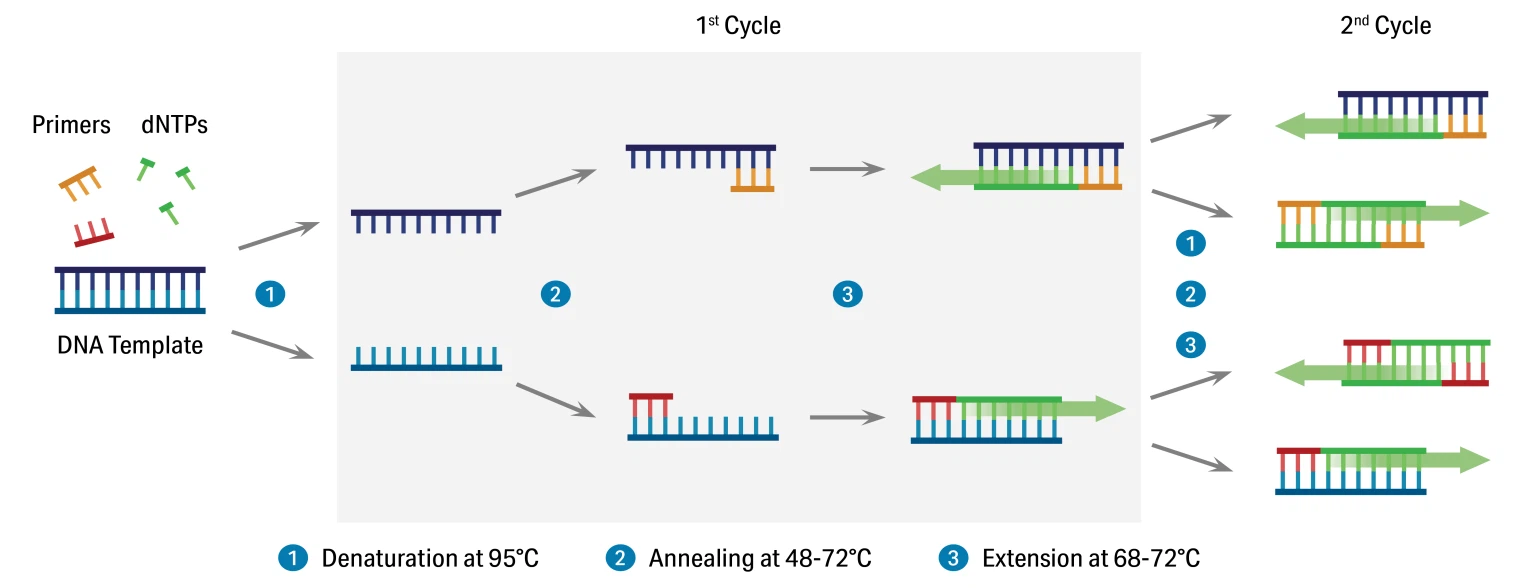
PCR is a biochemical process capable of amplifying a single DNA molecule into millions of copies within a short period of time. The reaction relies on repeated thermal cycling and consists of three main steps:
1.Denaturation (90–95 °C) – Double-stranded DNA is separated into single strands.
2.Annealing (55–65 °C) – Primers bind to the target sequences.
3.Extension (72 °C) – DNA polymerase synthesizes new DNA strands.
Through these temperature-controlled cycles, target DNA is amplified exponentially with high precision. However, PCR requires complex thermal cycling instruments and typically takes 1–2 hours to complete.
In contrast, RPA operates at a constant temperature of 37–42 °C, enabling rapid nucleic acid amplification without thermal cycling. The technology relies on the coordinated action of recombinase proteins, single-stranded DNA-binding proteins, and strand-displacing DNA polymerase to achieve highly specific target amplification under isothermal conditions.
The DNA polymerase used in RPA has strand displacement activity but lacks 5'→3' exonuclease activity. During amplification, outer primers extend along the template strand. When they encounter double-stranded regions synthesized from inner primers, the polymerase cannot degrade the downstream strand and instead displaces it, generating new amplification products.
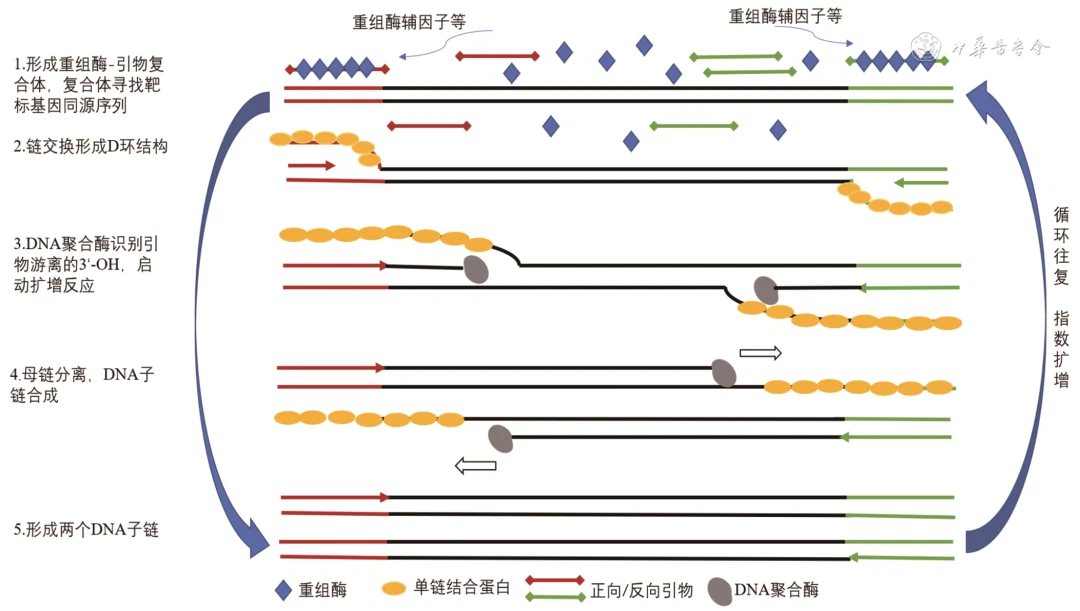
The entire reaction is completed under constant temperature, eliminating the need for complex instrumentation and enabling true point-of-care and field-based testing. By incorporating reverse transcriptase, RPA can also be applied to RNA target detection.
Amplification results can be analyzed using multiple readout formats, including endpoint detection, real-time fluorescence monitoring, lateral flow assays, and can be further integrated with CRISPR-Cas systems, microfluidics, or next-generation sequencing (NGS) for advanced assay development.
Application Scenarios: Laboratory Precision vs. On-Site Rapid Testing
PCR has become one of the most valuable molecular diagnostic technologies and remains the gold standard for nucleic acid testing.
Thanks to its high accuracy, cost-effectiveness, and scalability, PCR is widely used in clinical diagnostics, centralized laboratories, research institutions, and large-scale screening programs, where infrastructure and trained personnel are readily available.
RPA, on the other hand, offers clear advantages in rapid, on-site diagnostics. With amplification completed in as little as 20 minutes, minimal equipment requirements, and simple operation, RPA is ideally suited for.
- Primary healthcare and emergency settings
- Customs and border inspection
- Field screening of animal and plant diseases
- Environmental and food safety testing
When combined with portable devices and lateral flow strips, RPA enables fast and reliable molecular testing outside traditional laboratories.

MIRA (Multienzyme Isothermal Rapid Amplification) is Amp Future's proprietary isothermal amplification technology. It belongs to the same technical family as RPA and is inspired by natural DNA recombination and repair mechanisms, utilizing multiple functional enzymes to achieve rapid nucleic acid amplification under constant temperature.
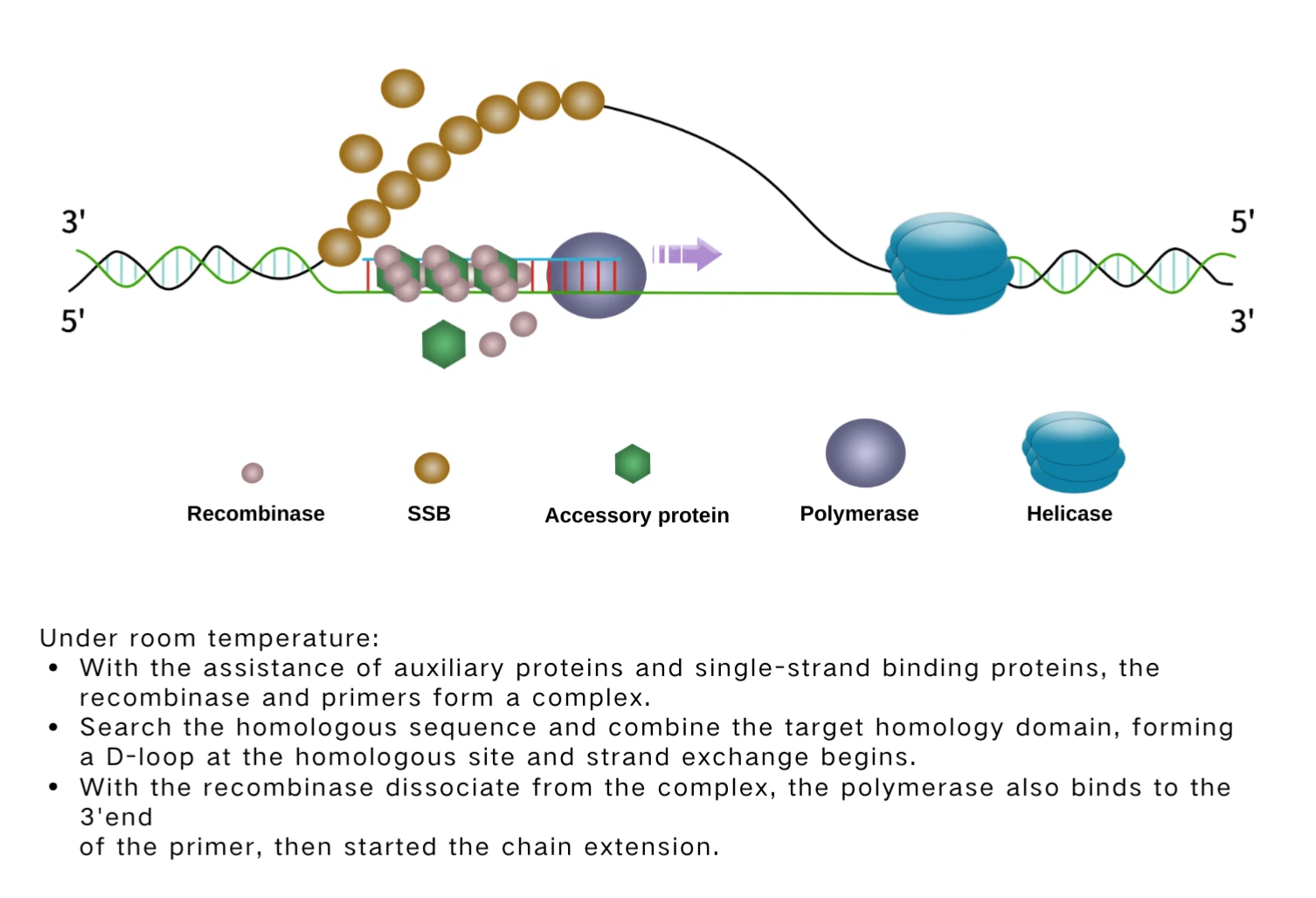
MIRA employs a coordinated system of five key enzymes, including helicase, recombinase, single-stranded DNA-binding protein, and DNA polymerase, to enable:
- Wide operating temperature range: 25 °C–45 °C
- Rapid amplification: results within 20 minutes
- High sensitivity and specificity
- Enhanced safety and reduced contamination risk
MIRA is a nucleic acid amplification technology specifically designed for true on-site and point-of-care testing.
Building on the MIRA platform, Amp Future has developed a comprehensive portfolio of products for rapid molecular POCT, including:
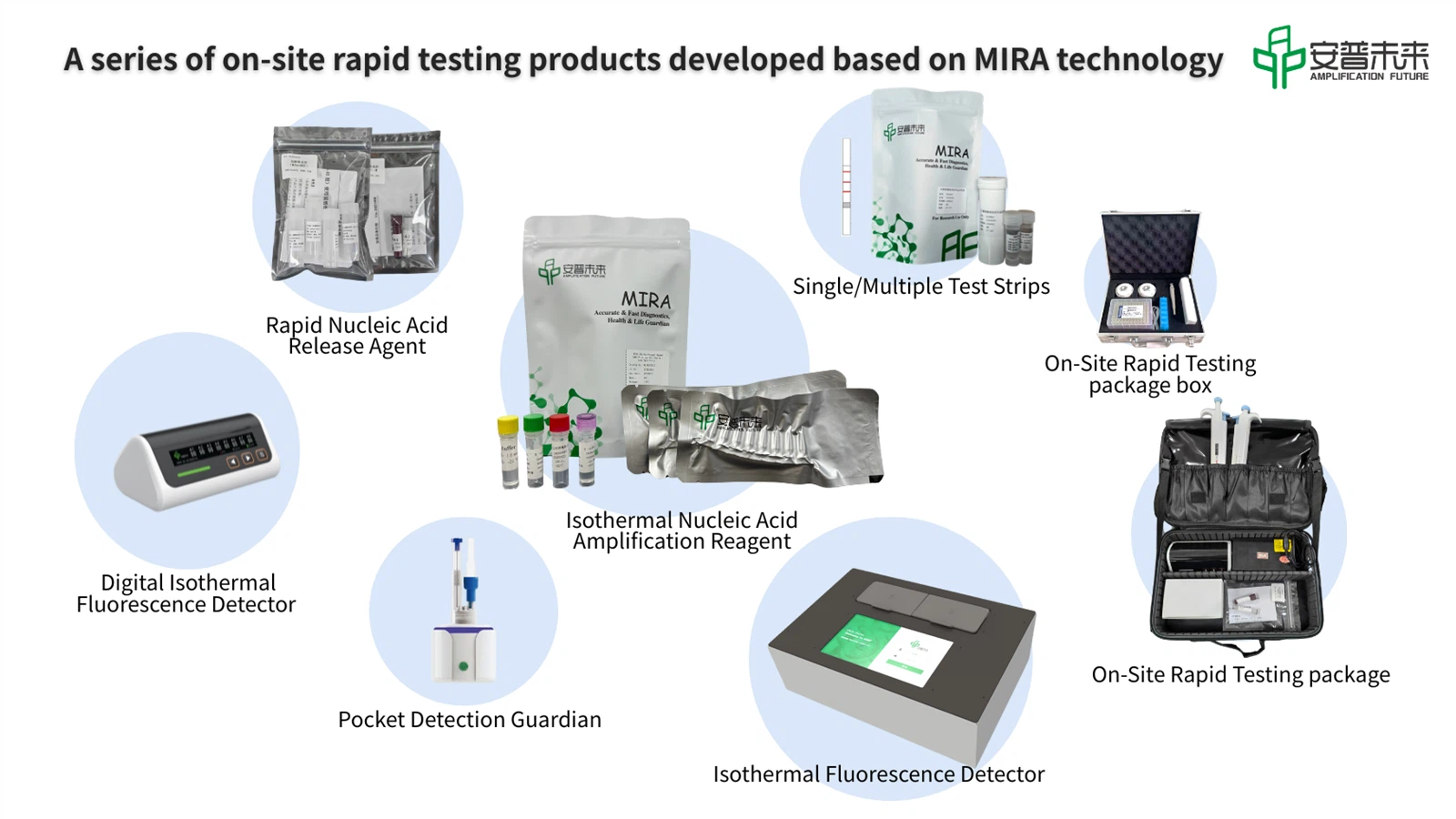
Rapid Nucleic Acid Release Agent:
Amplifiable nucleic acid is obtained within 5 minutes at room temperature; low inhibition, allowing for full sample loading of up to 50 μL; room temperature transport and storage, no light protection required.
Isothermal Nucleic Acid Amplification Reagent:
Amplification completed in 5-20 minutes, rapid and efficient; various reagent forms (lyophilized powder, lyophilized microspheres, etc.); various result presentation methods (electrophoresis, fluorescence, test strips).
Miniaturized Portable Devices:
Digital isothermal detectors, pocket-sized testing tools, easily held in one hand, equipped with a power bank, freeing you from the constraints of the laboratory and bringing accurate nucleic acid testing to the field.
Single/Multiple Test Strips:
Optimized based on the MIRA methodology for better compatibility; combined with MIRA technology, highlighting convenience.
Fully Automated Nucleic Acid Amplification Analyzer:
Requires only one sample loading operation for fully automated detection; detection limit down to single copy; isothermal amplification and automatic capping reduce the risk of contamination.
On-Site Rapid Testing package:
On-the-spot testing, anytime, anywhere, all in one package; completes testing in 30 minutes, accurate and sensitive.
For more product information or solutions, please feel free to contact us.